


No Clue? Start Here: What to Write in Your Detective's Journal


If you’ve ever sat down at a murder mystery dinner and thought, “I don’t even know what to write down,” you’re not alone. Not everyone is naturally investigative, but that doesn’t mean you can’t play like a pro.
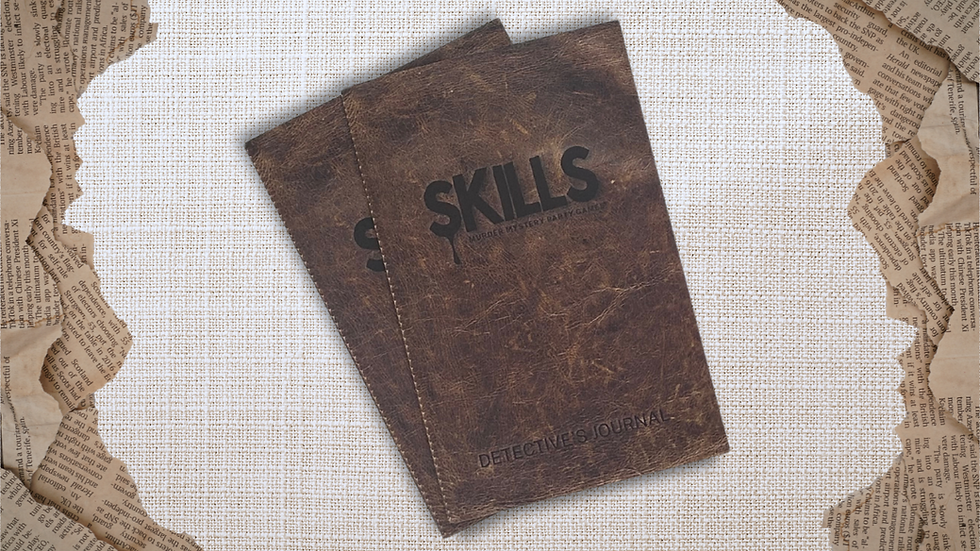
The Detective’s Journal is intentionally structured to guide you through the experience without overwhelming you. You don’t have to capture every second—just the bits that matter most to you. Let’s walk through how to use each page and make it your own.
1. Character Profile Page
Start by writing your character’s name, background, secrets, and goals. This helps you stay in character and gives you something to refer back to when you forget who you’re pretending to be halfway through. Jot down key relationships, alliances, or grudges too—those often become crucial!
It’s also a space to inject personality. Maybe your character has a catchphrase or a specific accent. Maybe they always suspect the wrong person first. Use this space to build them up and make the night feel theatrical.
2. Case Recap Log
This page is for tracking what’s happened so far. Write down major plot twists, key discoveries, and shifting suspicions. It’s a living timeline of your night. Who changed their story? What piece of evidence seemed suspicious? Did someone have a sudden outburst?
After the game, this page becomes your debrief. You can reflect on who you suspected and why, what you got right or wrong, and how the real killer managed to stay hidden (or not!).
3. Suspect Sheets
Each suspect gets their own space. Write down their motives, what they said they were doing when the crime happened, and any inconsistencies you catch. Pay attention to body language, too—did someone avoid eye contact or get flustered?
You don’t need to write full paragraphs—just bullet points or phrases like “Avoided answering” or “Too eager to accuse others.”
4. Evidence Tracker
This is your clue board on paper. Jot down anything that stands out: a dropped item, a torn note, an overheard threat. Draw connections, use arrows, and underline things that contradict each other. Think like a detective working a real case.
Bonus tip: Use symbols to mark evidence (e.g., ? for suspicious, ! for important, X for debunked). You’ll quickly scan your notes as the mystery deepens.
5. General Notes Page
This one’s all yours. Use it for jokes, doodles, overheard gossip, or theories you develop mid-game. You can also rate people’s costumes, write down your favorite in-character quotes, or plan your next move.
You don’t have to be Sherlock to make your journal useful—just be curious, observant, and willing to scribble down what stands out. Over time, you’ll find your own rhythm and style.
With the Detective’s Journal, every player, whether seasoned or brand-new, can walk away feeling like they cracked the case in their own unique way.


Comments